
Emergency Hail Storm Damage? We guarantee a 2-hour on-site inspection! Click to Call.
When Does Hail Damage Require Roof Repair Versus a Complete Roof Replacement

Hail damage usually requires roof repair when the damage is limited to specific areas and the rest of the roof remains in good condition. A complete roof replacement may be necessary when damage is widespread, roofing materials are badly compromised, or the roof already has significant wear. A professional inspection helps determine the right option by assessing the damage, the roof’s age, and its overall condition.
After a hailstorm, it can be difficult to know whether your roof needs a few repairs or a complete replacement. Some damage is visible from the ground, but other problems may be harder to spot. Repairing only a small area may not be enough if the damage extends across the roof. At the same time, replacing an entire roof may be unnecessary when the damage is limited.
The first step is to understand what the inspection reveals and why a particular solution makes sense for your home.
What Determines Whether Hail Damage Requires Repair or Replacement?
The decision depends on the extent of the damage, the condition of the roofing materials, and whether targeted repairs can restore the roof’s protection.
Five factors help guide the decision:
- Extent of damage: Is the damage limited to a few shingles, or does it affect several roof sections?
- Severity of impact: Have hailstones damaged the shingle surface or affected its ability to protect the home?
- Roof age: Does the roof have useful life remaining, or was it already showing signs of wear?
- Existing condition: Are there brittle shingles, previous repairs, or other problems that may affect the outcome?
- Repair feasibility: Can the affected areas be repaired without leaving other damaged sections untreated?
For example, a newer roof with damage limited to a small section may be suitable for repairs. An older roof with widespread hail impacts and existing deterioration may need replacement.
Neither option should be chosen based on roof age or hail size alone. The inspection findings should support the recommendation.
Roof Repair vs. Complete Roof Replacement: What’s the Difference?
A roof repair addresses specific damaged areas, while a complete roof replacement involves replacing the existing roofing materials across the roof or the agreed project scope.
| Factor | Roof repair may be suitable when… | Roof replacement may be suitable when… |
| Damage coverage | Damage is limited to specific areas. | Damage affects multiple sections or slopes. |
| Shingle condition | Most shingles remain in good condition. | Widespread damage or deterioration affects the roof. |
| Roof age | The roof has useful life remaining. | The roof is older and already shows significant wear. |
| Water protection | Targeted repairs can restore protection. | Repairs cannot adequately address the overall damage. |
| Repair practicality | Damaged materials can be replaced effectively. | Isolated repairs would not adequately address the problem. |
| Long-term condition | The surrounding roof remains sound. | Broader deterioration makes replacement more practical. |
These are general guidelines, not automatic rules. Visible hail marks do not always mean the entire roof needs replacement, and a roof without an active leak may still have damage that needs attention.
A qualified roofing professional should explain what was found, which areas are affected, and why the proposed work is appropriate.
What Signs of Hail Damage May Require Roof Repair?
Some hail damage is limited enough that targeted repairs may restore the affected area. However, the damage must be assessed carefully before deciding what to fix.
Four Signs to Watch For
- Damaged shingles: Individual shingles may show cracks, impact marks, or other signs of damage.
- Granule loss: Hail may knock protective granules from asphalt shingles, although normal aging can also cause granule loss.
- Dented roof components: Gutters, vents, and other exposed metal components may show dents after a hailstorm.
- Signs of water intrusion: Water stains, damp insulation, or moisture near roof openings may point to a problem that needs investigation.
These signs can help you decide whether to arrange an inspection, but they do not prove that hail caused the damage. An inspector should consider the pattern of impacts, the roof’s age, and other possible causes.
When Is a Roof Repair Enough?
A targeted repair may be appropriate when the damage is isolated, the surrounding roofing materials remain in good condition, and the affected area can be repaired effectively.
For example, replacing a small number of damaged shingles may be reasonable if the surrounding materials are still sound. The inspection should also cover nearby areas to make sure the problem does not extend beyond what is immediately visible.
The goal is to address the damage properly, not simply to choose the smallest job.
When Does Hail Damage Call for a Complete Roof Replacement?
A complete roof replacement may be appropriate when hail has damaged large portions of the roof or when existing wear makes repairs less practical.
Four conditions deserve closer attention:
- Widespread impact damage: Multiple roof slopes or large areas show signs of damage.
- Extensive shingle deterioration: Hail has affected materials that were already worn or weakened.
- Several damaged sections: Problems across the roof make isolated repairs insufficient.
- Poor overall roof condition: Existing deterioration limits the value of additional repairs.
These conditions may support replacement, but none automatically means a new roof is required. The recommendation should reflect the actual condition of the roofing system and whether repairs can restore its protective function.
Why Repeated Repairs May Not Be the Best Choice
Repairing one section at a time may not be practical when damage is spread across the roof. Repeated repairs can leave other affected areas unresolved, especially when the surrounding materials are already worn.
However, replacement is not always the less expensive option. The cost, scope of work, condition of the roof, and expected value of repairs should all be considered. Ask your roofing contractor in Mustang to explain the reasons for the recommendation and what each option includes.
How Does a Professional Hail Damage Roof Inspection Work?
A hail damage roof inspection should do more than identify obvious damage. It should explain what was found, where the problems are located, and what the findings mean for your home.
MT Roofing OKC focuses on detailed assessments, clear explanations, and documentation to help homeowners understand their options.
Detailed Assessments and Expert Documentation
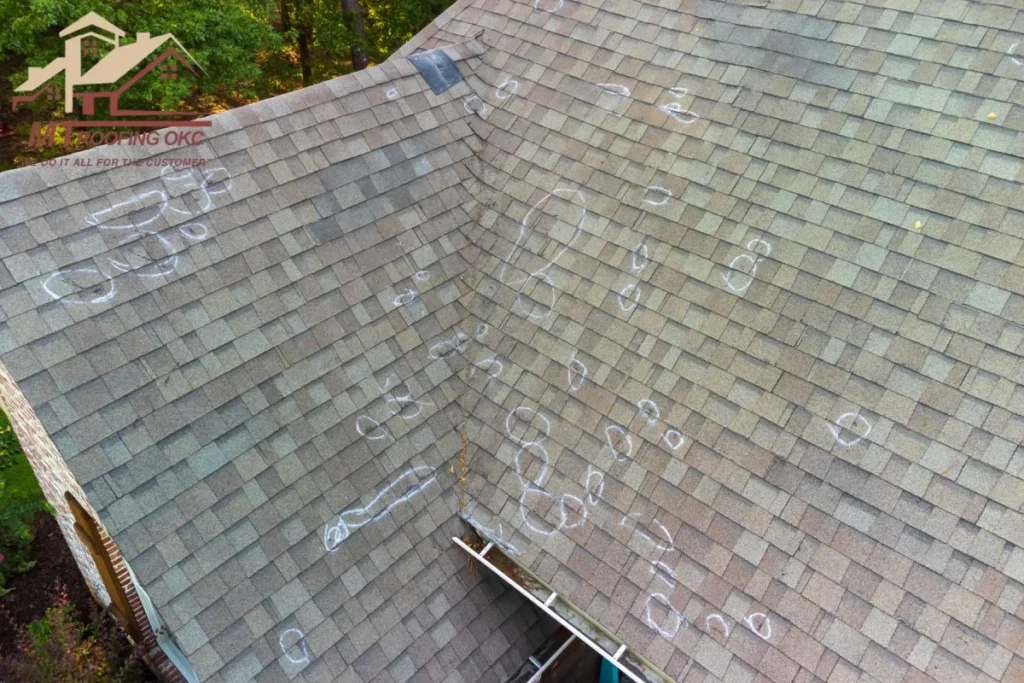
A thorough assessment examines the roofing materials and areas where damage may affect the roof’s ability to protect the home. The inspector should document the findings so you can understand the problem and the recommended next step.
A useful inspection report may include:
- Damage location: The roof sections and components where concerns were found.
- Damage description: What the inspector observed and why it matters.
- Photographic evidence: Images showing the affected areas.
- Recommended work: The proposed repairs or replacement and the reasons behind the recommendation.
- Additional concerns: Existing wear or other problems that may affect the decision.
This information gives you a clearer basis for comparing repair and replacement options.
Checking for Granular Delamination
Granular delamination refers to the separation or loss of the protective granules on an asphalt shingle. These granules help protect the shingle surface from weather exposure.
During an inspection, the roofer looks for areas where granules appear to have been knocked loose or where the shingle surface may have been affected by impact. The findings must be considered alongside the roof’s age and normal wear because granule loss alone does not confirm hail damage.
The goal is to determine whether the observed condition is consistent with storm damage and whether it affects the roof’s performance.
Assessing Fractured Mat Integrity
Asphalt shingles have an underlying mat that helps hold the material together. If this mat is fractured, the shingle may be less able to perform as intended.
Assessing fractured mat integrity means checking for signs that an impact has damaged the shingle beyond its visible surface. The inspector evaluates whether the material is compromised and whether a repair can address the problem.
Homeowners should not walk on the roof or pull at shingles to check for damage. A professional assessment is a safer way to investigate suspected problems.
How Does Insurance Documentation Support a Hail Damage Claim?
Roof damage and insurance coverage are separate questions. An inspection can document the roof’s condition, but the insurance provider determines coverage under the policy.
MT Roofing OKC offers Frictionless Adjuster Documentation Support to help homeowners organize the information needed for conversations with their insurance provider. This support includes documenting observed damage and helping homeowners understand the findings relevant to the next steps in the claim process.
Helpful records may include photographs, written inspection findings, repair estimates, and a description of the recommended work. Keep copies of claim correspondence and any additional documents requested by your insurer.
Insurance policies differ, and not every hail-related issue will be covered. Review your policy and ask your provider about reporting requirements, deadlines, and the information needed for your claim.
For homeowners comparing a roofing contractor in Mustang, OK, clear documentation and straightforward explanations can make the process easier to follow.
Applying Our 25-Year Guarantee and Lifetime Maintenance to Solve This
Choosing between repair and replacement is only part of the decision. You should also understand what protection and support come with the roofing work.
25-Year Guarantee and Lifetime Maintenance
MT Roofing OKC highlights its 25-Year Guarantee and Lifetime Maintenance offering. Before agreeing to a project, ask for the written terms so you know exactly what the offering includes.
Confirm these details:
- What the guarantee covers and what it excludes.
- Whether the terms differ between repairs and complete replacement.
- What lifetime maintenance includes and how it is provided.
- Whether maintenance requirements or other conditions apply.
These details matter because a guarantee should clearly explain the work and circumstances it covers. Do not assume that every repair qualifies for the same terms or that all future storm damage is automatically covered.
Dedicated On-Site Project Manager
A Dedicated On-Site Project Manager gives homeowners a clear point of contact during the roofing project. This helps keep communication organized and provides someone to ask about the agreed work, project progress, and next steps.
When repairs or replacement are recommended, the project manager can help explain how the planned work relates to the inspection findings. Homeowners should know what work is planned and whom to contact when questions arise.
This approach supports MT Roofing OKC’s promise: “We do it all for the customer.” The focus is on clear communication, practical guidance, and helping homeowners understand the process without unnecessary pressure.
Myth vs. Fact: Does Every Hail-Damaged Roof Need Replacement?
No. Hail damage does not automatically mean the entire roof needs to be replaced. The right solution depends on the severity and spread of the damage and the condition of the existing roofing materials.
| Common myth | What homeowners should know |
| Every hail impact requires a new roof. | Localized damage may be repairable when the rest of the roof is in good condition. |
| No leak means no damage. | Some damage may affect roofing materials before water enters the home. |
| Granules in the gutters prove hail damage. | Granule loss can also result from normal aging. |
| Insurance always pays for a replacement after hail. | Coverage depends on the policy and the insurer’s assessment. |
| An older roof must always be replaced after a storm. | Age matters, but damage and overall condition also influence the decision. |
Be cautious of anyone who recommends replacement without explaining the findings. A reliable Mustang roofing contractor should show you the evidence, explain the options, and answer your questions.
People Also Ask
Can hail damage be repaired without replacing the entire roof?
Yes. If the damage is limited to specific areas and the remaining roofing materials are in good condition, targeted repairs may be enough. An inspection helps determine whether repairs can properly address the damage.
How do I know if hail damage is severe enough to replace my roof?
Widespread damage, significant deterioration, or multiple compromised sections may support replacement. The recommendation should be based on the roof’s actual condition, not just the size of the hailstones.
Does hail damage always qualify for an insurance claim?
No. Coverage depends on your policy, its exclusions, and the insurer’s assessment. Document the damage and contact your provider to understand the requirements for your situation.
Can hail damage cause a leak weeks or months later?
Yes. Damaged shingles or vulnerable roof areas may allow water to enter during later rainfall. A delayed leak can also have other causes, so the source should be inspected.
Should I get an inspection if I cannot see damage from the ground?
If your property experienced significant hail, a professional inspection can help identify damage that is difficult to see from the ground. Do not climb onto the roof to check it yourself.
Get a Clear Answer Before Choosing Roof Repair or Replacement
Hail damage does not always require a complete roof replacement. When damage is limited and the rest of the roof remains sound, repairs may be enough. When damage is widespread, or the roof already has significant wear, replacement may be the more practical option.
The best way to decide is to get a thorough inspection, review the findings, and understand why a particular solution is recommended.
MT Roofing OKC can help you understand your roof’s condition, document the findings, and work through the next steps. As an Oklahoma-only roofing company, MT Roofing OKC focuses on clear communication and helping homeowners make informed decisions without unnecessary pressure.
Call us today to request your free roof inspection. We’ll explain what we find and help you understand your options, so you can make an informed decision for your home.