
Emergency Hail Storm Damage? We guarantee a 2-hour on-site inspection! Click to Call.
How Do Contractors Fix Ponding Water on Flat Roofs Without Replacing the Entire Roof

Contractors can often fix ponding water on flat roofs without replacing the entire roof by correcting drainage problems, adding tapered insulation to improve water flow, or repairing low spots in the roofing surface. The right solution depends on the roof’s condition, the cause of the standing water, and whether moisture has damaged the underlying materials. A thorough inspection helps determine whether targeted repairs or roof restoration can resolve the issue without a full replacement.
Flat roofing can often be repaired or restored without replacing the entire roof, provided the existing system is still in suitable condition. The right approach depends on the roofing material, drainage, insulation, and any damage beneath the surface. A thorough inspection helps determine whether a repair, restoration, or new roofing system is the best fit for your home.
Flat and low-slope roofs need careful planning because water does not run off them as quickly as it does on steep roofs. Blocked drains, worn seams, poor drainage, and damaged roofing materials can lead to leaks if left unaddressed.
If you have noticed standing water, cracks, or water stains inside your home, the first step is to find out what is causing the problem. Some issues may need only a targeted repair, while others call for more extensive work. The condition of the existing roof should guide that decision.
What Is Flat Roofing?
Flat roofing refers to roofing systems designed for flat or low-slope surfaces. Although these roofs may look level, they usually need a slight slope to direct rainwater toward drains or roof edges.
Many flat roofs use a continuous waterproof membrane rather than individual shingles. The system may also include insulation, flashing, and drainage components that work together to protect the home.
A properly installed roof should:
- Keep water from entering the building.
- Direct rainwater toward the intended drains or outlets.
- Protect the roof structure from regular weather exposure.
- Maintain secure seams and seals around vents, edges, and other openings.
The membrane alone does not determine how well the roof performs. Drainage, insulation, flashing, and installation quality also matter.
Which Flat Roofing Materials Are Available?
Different materials have different features and installation needs. The best choice depends on the roof’s design, the condition of the existing materials, and the level of protection the home needs.
TPO Membrane Roofing
Thermoplastic polyolefin, or TPO, is a single-ply roofing membrane used on many low-slope roofs. It is often available in light colors and has seams that are joined with heat.
TPO can be a suitable option when the roof design and installation requirements match the product.
Key features include:
- Heat-welded seams: Special equipment joins the membrane sections to form secure seams.
- Light-colored surface options: Some TPO membranes reflect more sunlight than darker roofing surfaces.
- Single-ply construction: The membrane creates a continuous layer across the roof.
The quality of a TPO roof depends on more than the membrane itself. The seams, edges, flashing, and drainage details must be installed correctly. The roofing contractor in Norman should follow the product manufacturer’s instructions for the selected system.
Durable EPDM Rubber Roofing
EPDM stands for ethylene propylene diene monomer. It is a synthetic rubber membrane used on many low-slope roofs.
EPDM is flexible and can handle normal movement caused by temperature changes when properly installed. It is available in different thicknesses and installation systems.
Important features include:
- Flexible material: The membrane can accommodate normal roof movement.
- Weather resistance: EPDM is made for outdoor exposure.
- Different installation methods: Depending on the system, it may be fully adhered, mechanically attached, or installed using another approved method.
Seams, edges, and flashing still need careful attention. Poorly sealed joints can allow water to enter, even when the main membrane remains in good condition.
TPO and EPDM are not interchangeable in every situation. A roofing professional should compare the roof’s needs, product requirements, and installation options before recommending a material.
Why Does Polyiso Insulation Matter in Flat Roofing?
Polyiso, short for polyisocyanurate, is a rigid insulation commonly used in roofing systems. It helps reduce heat transfer through the roof and can form part of the base beneath a compatible roofing membrane.
The right insulation depends on the roof design, the existing structure, and the project’s requirements.
Key Features of Polyiso Insulation
- Thermal performance: Helps reduce heat transfer through the roof.
- Rigid boards: Provide a stable layer beneath compatible roofing materials.
- Different thicknesses: Allow the roof design to meet insulation needs.
- Tapered options: Can help direct water toward drains when included in a suitable drainage plan.
Tapered insulation can improve drainage by creating a gradual slope across the roof. However, it will not correct every problem. Structural sagging or damage to the roof deck may require separate repairs before new insulation is installed.
The contractor should also check for signs of trapped moisture. Covering wet insulation or damaged roofing layers without addressing the problem can lead to continued trouble.
How Is a Flat Roofing System Installed?
The installation process depends on the material, roof structure, and scope of work. A new installation may differ from a replacement or restoration project.
Five Steps in a Typical Installation
- Inspect the roof. Check the surface, drainage, flashing, and signs of moisture or damage.
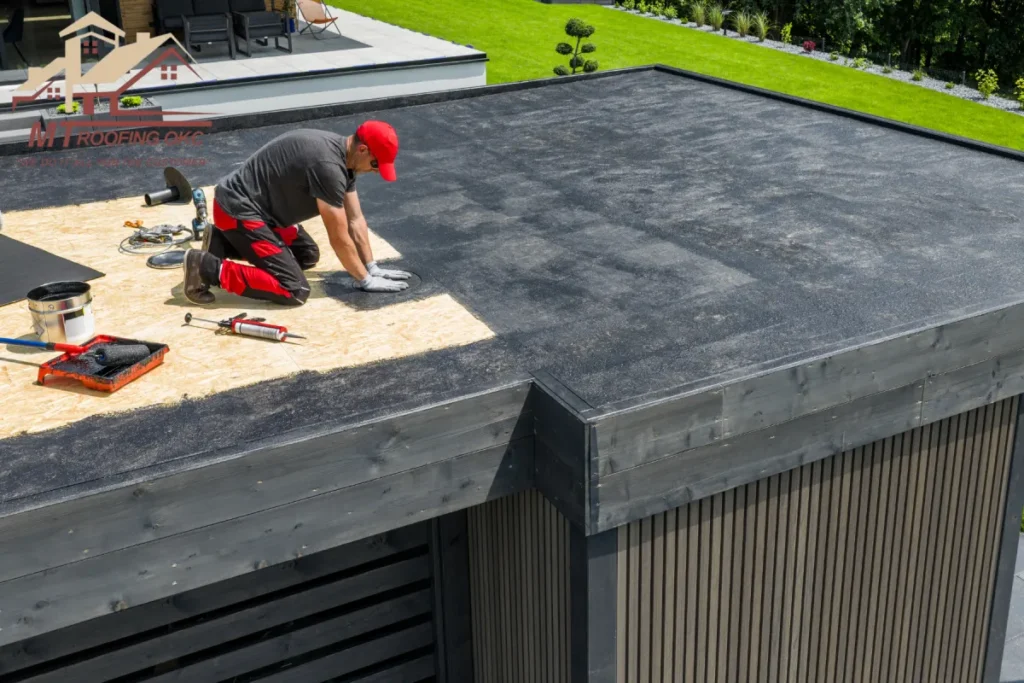
- Prepare the roof deck. Repair damaged or unsuitable areas before installing the new system.
- Install insulation if needed. Choose insulation that fits the roof design and project requirements.
- Install the membrane. Secure the roofing material using the method specified for the selected system.
- Check the finished details. Review seams, edges, drains, flashing, and roof openings.
The areas around vents, pipes, walls, and drains deserve special attention because they interrupt the main roof surface. Each needs suitable flashing or other waterproofing details.
What Does Code-Compliant Installation Mean?
A code-compliant installation follows the building codes and other requirements that apply to the project. These may cover roof construction, insulation, drainage, and fire safety.
The requirements depend on the property, the work being done, and the local rules in effect. Product instructions also matter because different roofing systems have specific installation needs.
Before work begins, ask what the estimate includes, whether permits or inspections are required, and how the Norman roofing contractor plans to handle drainage and waterproofing details.
Can an Existing Flat Roof Be Repaired Instead of Replaced?
Yes. Some flat roofs can be repaired without removing the entire roofing system. The right option depends on the extent of the damage, the condition of the membrane, and whether moisture has reached the layers below it.
When a Repair May Be Enough
A targeted repair may be suitable when:
- The damage is limited to a small area.
- The surrounding membrane remains in good condition.
- Seams or flashing can be repaired with compatible materials.
- The drainage system works as intended.
- There is no sign of widespread moisture damage.
For example, a damaged seam or a problem around a roof opening may be repairable if the rest of the system remains sound. The contractor should check nearby areas to determine whether the problem extends beyond the visible damage.
When Flat Roof Coating and Restoration May Work
Flat roof coating and restoration may be an option when the existing roof is still suitable for the selected system. Depending on the product, a coating may add a protective layer and help address certain surface problems.
However, coatings cannot solve every roofing issue. They generally will not correct structural sagging, replace badly damaged insulation, or fix serious drainage problems on their own.
Before recommending a coating, the contractor should check the existing surface, identify repairs that must be completed first, and confirm that the product is compatible with the roof. Ask what the coating is designed to do and what limitations will remain after the work.
What Are the Signs That a Flat Roof Needs Attention?
Flat roofs can show signs of trouble before water reaches the living space. Look for changes that may point to a drainage or roofing problem.
- Standing water: Water remains in the same area after the roof should have drained.
- Cracked or open seams: Sections of the membrane appear separated or damaged.
- Bubbles or blisters: Parts of the roofing surface look raised or uneven.
- Indoor water stains: Ceilings or walls show discoloration or damp spots.
- Damaged flashing: Materials around vents, walls, or other roof openings appear loose or worn.
These signs do not always mean the roof needs to be replaced. An inspection can help determine whether a repair, drainage improvement, or broader project is appropriate.
If your home has a flat or low-slope roof, repeated ponding or leaks are good reasons to arrange an inspection. Avoid walking on a wet roof or climbing onto a surface that may be damaged.
How Do You Choose the Right Flat Roofing Contractor?
The roofing material is only one part of the project. The contractor should also inspect the existing roof, explain the proposed work, and make sure the details are handled correctly.
Before choosing a contractor, ask these questions:
- What did the inspection find? Ask for a clear explanation of the roof’s condition and the cause of any problems.
- Why is this material recommended? The answer should relate to the roof’s design and needs.
- How will drainage be handled? The plan should explain how water will reach the intended outlets.
- What does the estimate include? Confirm the materials, preparation, flashing, cleanup, and any needed repairs.
- What warranty terms apply? Ask for the terms in writing rather than relying on verbal promises.
When comparing a roofing contractor in Norman, OK, check that the company is properly licensed and insured as applicable, communicates clearly, and provides a written scope of work.
A reliable contractor should explain when a repair is enough and when a larger project is needed. You should understand the reason for the recommendation before agreeing to the work.
Applying Our Flat and Low-Slope Roofing Systems to Your Home
MT Roofing OKC is a locally owned roofing company serving the Oklahoma City metro and surrounding communities. Its approach centers on thorough inspections, clear explanations, and helping homeowners understand what their roofs need.
The company’s flat and low-slope roofing systems offering should begin with an assessment of the existing roof. The type of membrane, insulation, drainage layout, and condition of the roof all affect the best next step.
TPO Membrane Installations
TPO may be suitable for a low-slope roof when the design and project requirements match the membrane. Proper seam welding, flashing, edge details, and drainage planning are important parts of the installation.
Durable EPDM Rubber Roofing
EPDM may suit roofs that need a flexible rubber membrane. The contractor should confirm that the product and installation method fit the roof and that all joints and transitions can be sealed properly.
Polyiso Insulation Systems
Polyiso can help improve the thermal performance of a roofing system. The correct thickness, placement, and drainage design should be considered as part of the full roof plan.
Flat Roof Coating and Restoration
Restoration may be worth considering when the existing roof is still a suitable base for the selected coating. An inspection should identify any repairs or preparation needed before the coating is applied.
MT Roofing OKC’s promise is simple: “We do it all for the customer.” That means explaining the inspection findings in plain language, discussing suitable options, and making the next steps clear. Ask the team which of these systems are appropriate for your specific roof before choosing a project.
People Also Ask
How long does a flat roof last?
The lifespan depends on the roofing material, installation quality, weather exposure, drainage, and maintenance. Follow the product guidance and arrange an inspection if you notice damage or recurring problems.
Is TPO better than EPDM for a flat roof?
Neither material is best for every roof. TPO and EPDM have different features and installation needs. The right choice depends on the roof design, product specifications, and project requirements.
Can a flat roof be coated instead of replaced?
Sometimes. A coating may be suitable when the existing roof is in good enough condition and compatible with the selected product. Widespread damage, trapped moisture, or structural issues may require other work first.
Why does water collect on my flat roof?
Common causes include blocked drains, poor drainage design, low spots, or roof sagging. An inspection can help identify the cause and determine whether drainage changes or other repairs are needed.
Does flat roofing require special maintenance?
Yes. Flat roofs need regular attention to drains, seams, flashing, and the membrane surface. Keeping drainage paths clear and addressing damage early can help reduce the risk of leaks.
Get Clear Advice About Your Flat Roof
The right flat roofing system depends on the roof’s condition, how it drains, and the protection your home needs. TPO, EPDM, polyiso insulation, and coating systems each have a role, but none should be chosen without considering the full roofing assembly.
If you need help understanding your options, MT Roofing OKC can start with a thorough inspection and explain the next steps in plain language. As a locally owned Oklahoma roofing company, the team aims to give homeowners clear guidance without unnecessary pressure.
MT Roofing OKC can help you understand your roof’s condition and the options worth considering. Call us now to request a free roof inspection.